Harties turns green again: what’s growing, and what’s being done?
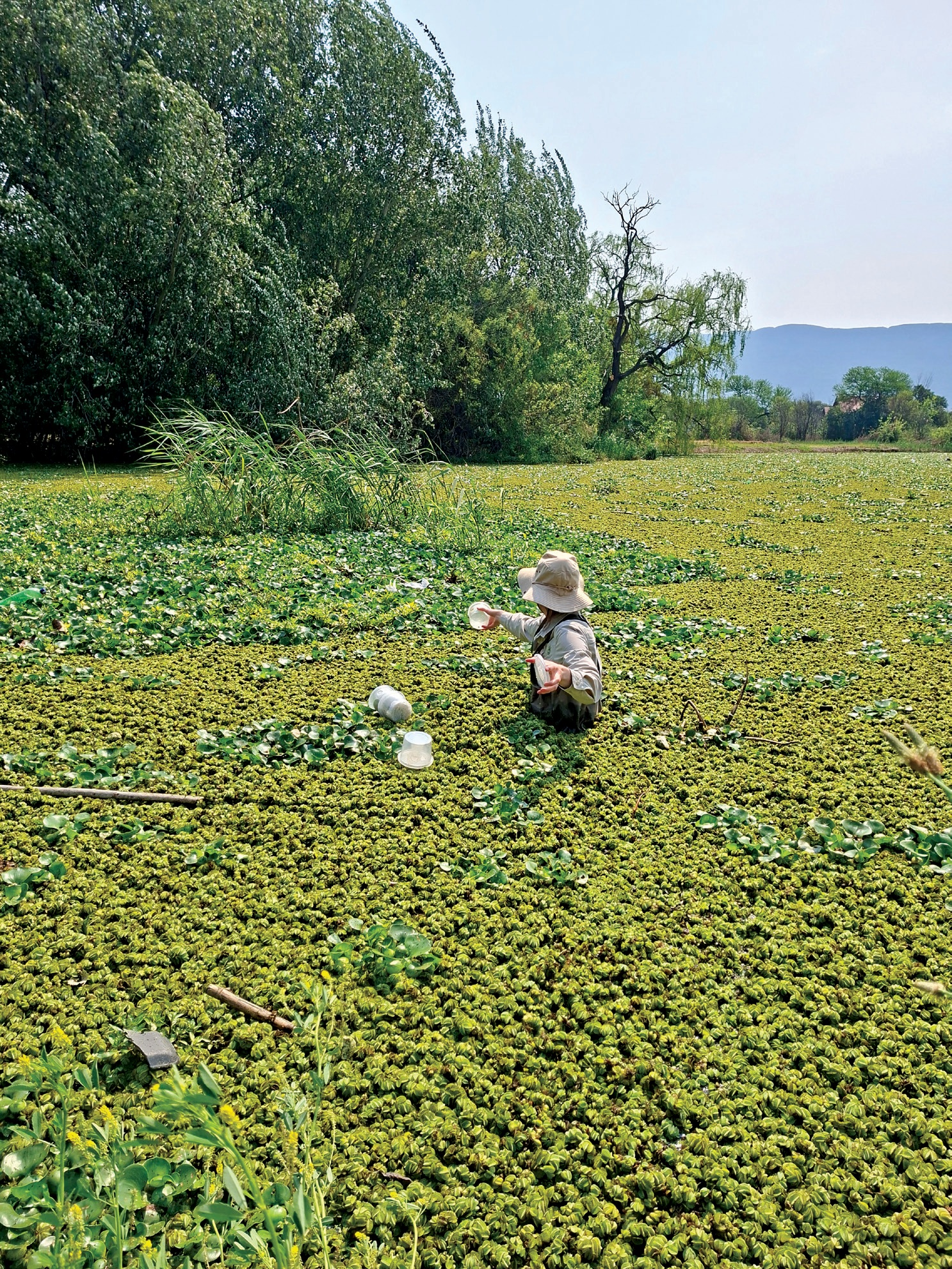
Dr Kelby English of the Centre for Biological Control released water hyacinth hoppers at Hartbeespoort Dam on Friday, 25 September 2026, as part of the ongoing biological control programme.
Residents’ concerns prompt a fresh update as the CBC releases 80,000 water hyacinth hoppers and monitors a changing mix of invasive plants
Platinum Weekly newspaper | Hartbeespoort – The green blanket on Hartbeespoort Dam has again raised concerns among residents. Following questions about the dam’s condition, Platinum Weekly approached Prof. Julie Coetzee, deputy director of Rhodes University’s Centre for Biological Control (CBC), for an update. Thank you to the readers who raised their concerns and encouraged us to revisit this important issue.
The latest information shows that the dam’s floating vegetation has been changing: common salvinia expanded following the successful reduction of water hyacinth earlier this year, but water hyacinth is now growing steadily again.
A changing green blanket
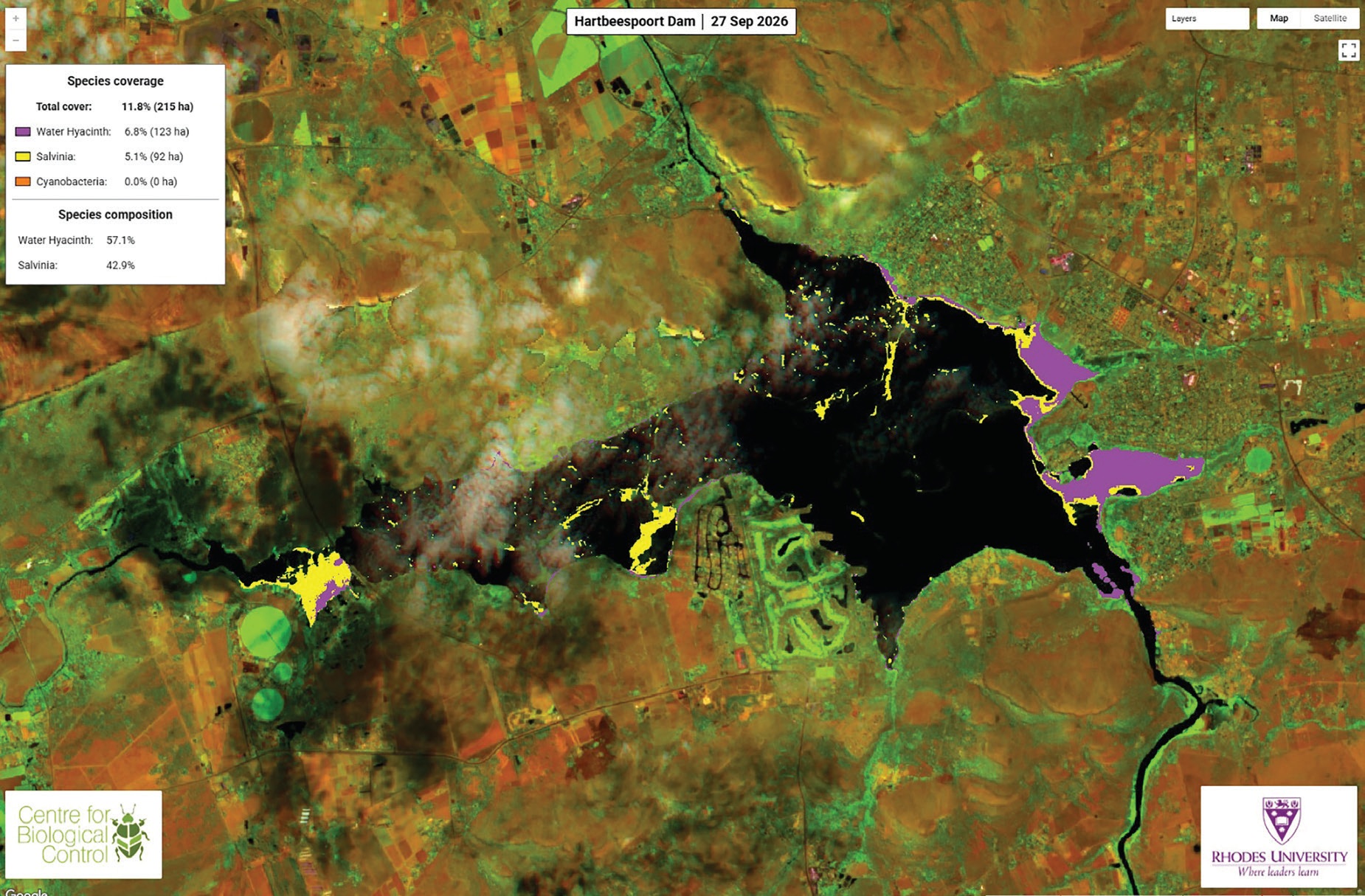
According to Coetzee, common salvinia coverage increased from approximately 10 hectares to 440 hectares, or about 24% of the dam, following the reduction in water hyacinth. Its coverage subsequently appeared to stabilise, while field surveys found dense salvinia mats with water hyacinth beginning to grow among them.
The balance shifted during September.
“With the resurgence of water hyacinth, common salvinia growth is in decline, most likely due to competition from water hyacinth,” Coetzee explained. The CBC recorded a rapid decline in salvinia density over the month, while water hyacinth increased steadily within the mat.
According to Coetzee’s latest update, satellite imagery indicates an approximately equal mix of the two plants within a mat measuring about 215 hectares. This changing mix matters: the green vegetation visible on the dam is not all water hyacinth.
Tiny hoppers, continued action
The CBC has released an additional 80,000 water hyacinth hoppers onto the mat to increase the insects’ population. Dr Kelby English was photographed releasing the hoppers on Friday, 25 September 2026.
Readers may remember our 12 December 2025 article, “Planthoppers to the Rescue! Eating Through the Hyacinth at Harties”. At the time, water hyacinth coverage was estimated at 40– 45% during the week of 4 November 2025.
That report explained the role of Megamelus scutellaris, the tiny water hyacinth planthopper used in the biological control programme. The insects weaken the plants and reduce flowering and seed production. Coetzee says the water hyacinth biological control programme is progressing according to plan. As in previous spring seasons, water hyacinth is expected to suppress and outcompete common salvinia.
However, fewer new seeds do not mean the old problem has disappeared. “Although the biocontrol agents reduce water hyacinth flowering and therefore seed output, there is still an extensive seed bank in deeper sediment,” she said.
Coetzee also cautioned that uncertainty associated with the El Niño climate pattern, rainfall and dam water levels influences seed germination and growth.