Braving dangerous water for an education
Platinum Weekly newspaper | Rustenburg, Zinniaville – Every school day, children from Reutwile Zone 6 (Zinniaville) face a choice no child should have to make: take the longer route they cannot necessarily afford, or brave an unsafe and polluted stream to get to school.
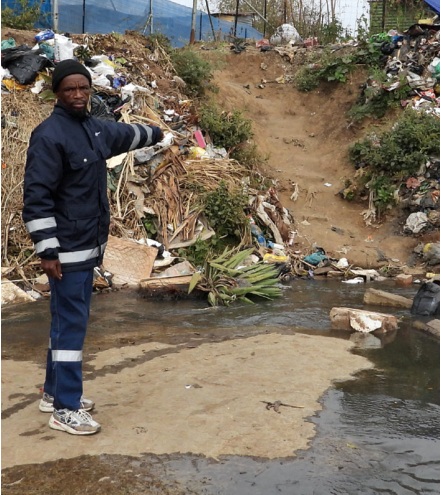
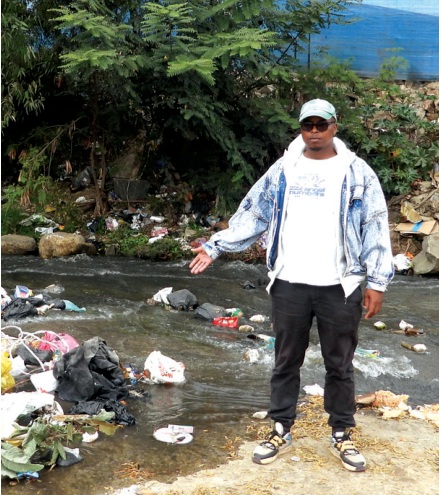
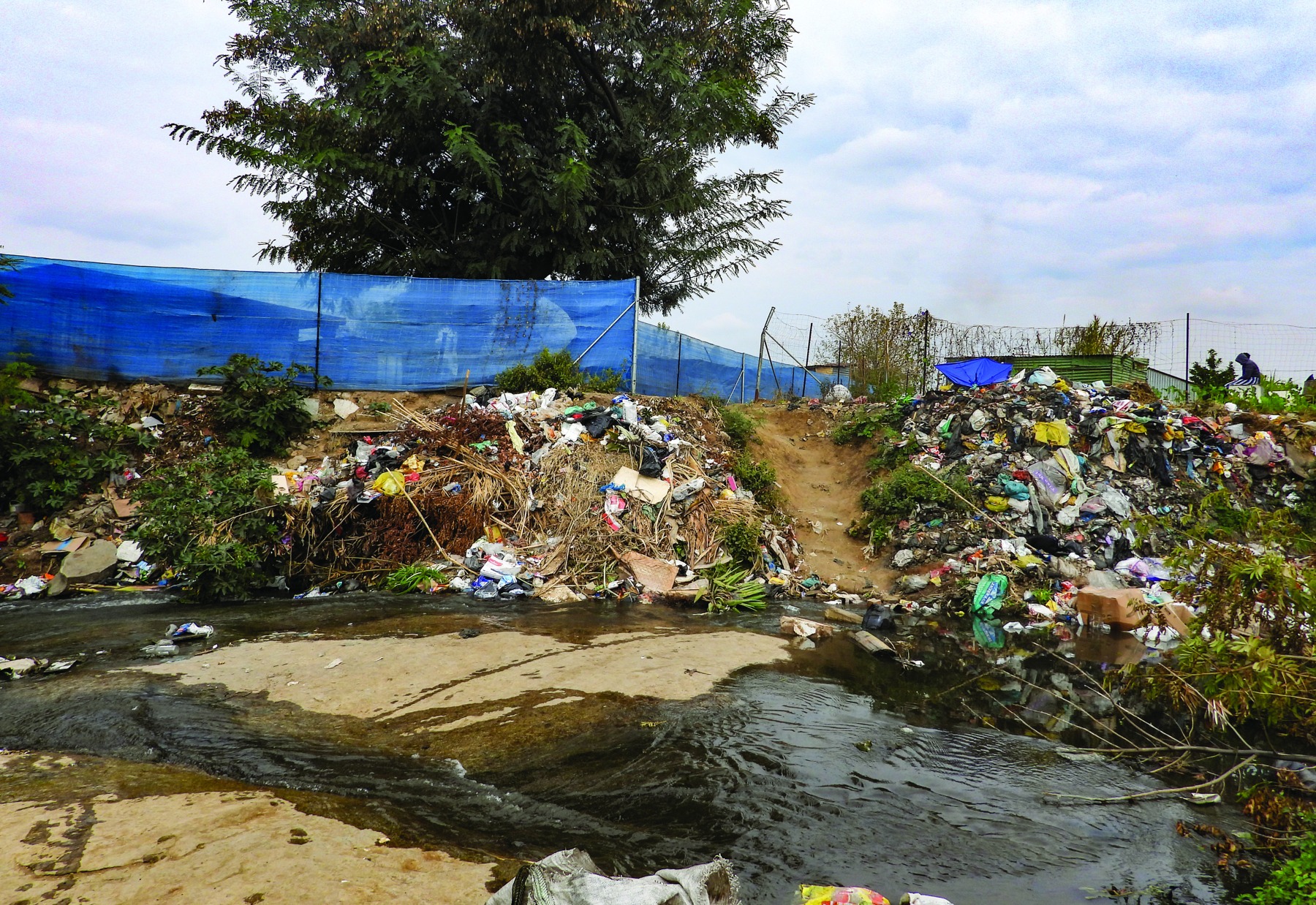
The Dorpspruit runs through this part of Rustenburg, separating residents of the informal settlement from Karlienpark and essential services on the other side. Among these are Karlienpark Primary School and Karlien Park Clinic, which residents need to access.
The stream is not only an obstacle during the rainy season. Residents cross the watercourse throughout the year to reach school, work and healthcare. When heavy rains come and the water level rises, however, residents say the crossing can become extremely dangerous and at times impossible to negotiate.
Residents are now calling for a bridge across the Dorpspruit, saying they desperately need a safe pedestrian crossing to connect their community with Karlienpark.
Adding to an already difficult situation is another serious problem: illegal dumping. Large quantities of rubbish have accumulated along and around the crossing, leaving parts of the area resembling an informal dumpsite. It is alleged that much of the waste originates from within the informal settlement itself. Regardless of its source, residents, including children, must make their way through the polluted environment when using the shortcut.
Community representative Avuyile Mabhunguza says residents have repeatedly complained to the Rustenburg Local Municipality about the lack of a safe pedestrian crossing. According to residents, the issue has persisted for approximately nine years. The municipality, however, faces its own constraints. As Reutwile Zone 6 is an informal settlement, funding for permanent infrastructure in the area is limited.
For children walking to Karlienpark Primary School, the consequences are particularly troubling. They negotiate rubbish, dirty water and an unsafe stream crossing simply to get to their classrooms. The obvious question is: why not simply use another route?
According to Luan Snyders, deputy leader of the DA in North West, residents have been warned that the stream crossing is unsafe and should not be used, with alternative transport such as taxis being the safer option. But Snyders said the reality on the ground cannot be ignored.
“These are among the poorest of the poor,” he said. “Telling people to use taxis is one thing, but many simply do not have the money to pay for transport every day.” Snyders expressed sympathy for the residents, but said the problem is considerably more complicated than simply constructing a bridge.
According to him, Reutwile Zone 6 is an informal settlement, with residents having occupied the area since approximately 2016. He said the settlement is situated in an area regarded as unsafe and affected by a flood line, while services and infrastructure in the settlement are largely informal.
This creates a difficult situation. Building permanent infrastructure in an informal settlement situated in an unsafe area raises its own planning questions, while relocating an established community is neither a quick nor simple solution. Yet while those bigger questions remain unresolved, daily life continues.
Residents still need to work. Sick and elderly people still need healthcare. Pregnant women still need access to the clinic. And, every weekday, children still need to get to school.
Mabhunguza said the crossing is particularly difficult for children, elderly residents, women and people with disabilities. During heavy rainfall, residents may have to take extended routes and pay additional transport costs that many households can ill afford. Residents have also raised concerns about personal safety along the isolated route, including the risk of robbery and other crimes.
For Snyders, the children remain one of the most concerning aspects of the situation. They are effectively braving dirty and potentially dangerous water for an education – not because crossing a stream is the sensible route to school, but because poverty can severely limit the alternatives available to them.
The illegal dumping makes that reality even harder to ignore. Regardless of who is responsible for the dumping, it is worsening an already dangerous situation. For Mabhunguza, a safe crossing would represent much more than convenience. “A bridge isn’t just concrete – it is access, safety and dignity. Our children should be able to go to school without risking their lives, and our gogos should be able to reach the clinic.”
There may be no quick answer to Reutwile’s larger challenges. The status and location of the informal settlement, the flood risk, illegal dumping, poverty and the need for safe access all form part of a complicated problem. But amid those complications are children doing something remarkably ordinary: trying to get to school. And for them, that ordinary journey should not require extraordinary courage.
Solution?
Platinum Weekly is calling on our community’s out-of-the-box thinkers! There may not be a simple solution, but perhaps someone has an innovative, practical idea to help create a safer crossing for the children of Reutwile Zone 6.
Have an idea? We want to hear it! Email news@platinumweekly.co.za