WELLBEING IS NOW RECOGNISED IN LAW, SO WHY ARE WILD ANIMALS STILL SUFFERING IN CIRCUS CAGES?
Response to Rustenburg circus: Entertainment should not come at the expense of animal wellbeing
| This response follows the circulation of pamphlets advertising a circus at Oom Paul School in Rustenburg from 28 October to 1 November 2026. |
Platinum Weekly newspaper | Rustenburg – The statutory definition of wellbeing in South Africa reads: “wellbeing means the holistic circumstances and conditions of an animal, which are conducive to its physical, physiological and mental health and quality of life, including the ability to cope with its environment.”
Crucially, this definition in Section 43(c) of the National Environmental Management Amendment Act 2 of 2022 is not expressly limited to free-roaming animals.
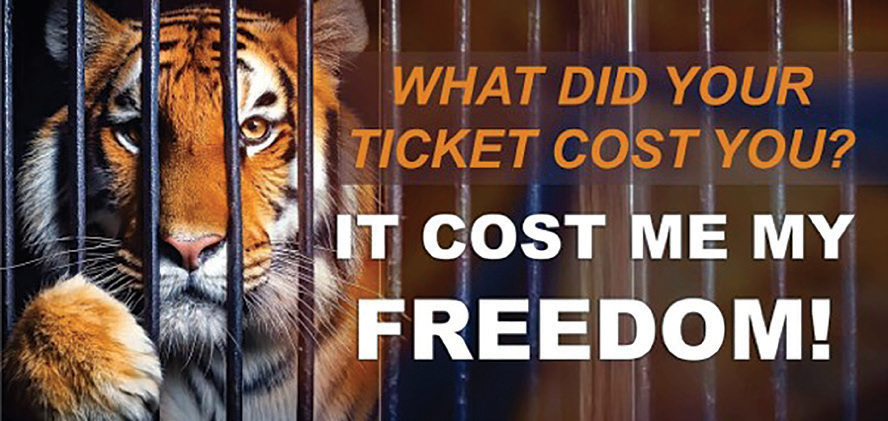
When we consider the basic needs and natural behaviours of lions and tigers, research shows is that they are wild animals with complex physical, psychological and social needs – not props for human entertainment. Lions typically live in prides or coalitions, with territories that can range from 20 to 400 square kilometres. Tigers are generally solitary, highly territorial animals. Depending on the habitat and availability of prey, their territories can range from 10 to 400 square kilometres. They are also predominantly nocturnal.
So how can permits still be issued allowing wild animals to be confined in cages and forced to perform meaningless tricks for the profit of circus owners? How does a lifetime of confinement and forced performance reconcile with a legal definition of wellbeing that recognises an animal’s physical, physiological and mental health, quality of life and ability to cope with its environment?
Wild animals in circuses deserve retirement in reputable sanctuaries, where their individual needs can be met and they can live out their lives with dignity, in environments that allow them to express as much of their natural behaviour as possible. Charlie, now known as Duma, was taken from the wild to perform in a circus before spending more than 40 years confined in a zoo cage. His story is a reminder that a different future is possible – one in which wild animals are given the opportunity to live with greater freedom and dignity.
We cannot undo the suffering these animals have endured. But we can refuse to perpetuate it. The law recognises wellbeing. Now it is time for the treatment of wild animals in captivity to reflect it.
Greed, ignorance and human entitlement must never take precedence over the lives and wellbeing of sentient beings.
Cheryl Phillips, former DA MP and former shadow deputy minister of environment, forestry and fisheries BAT Author