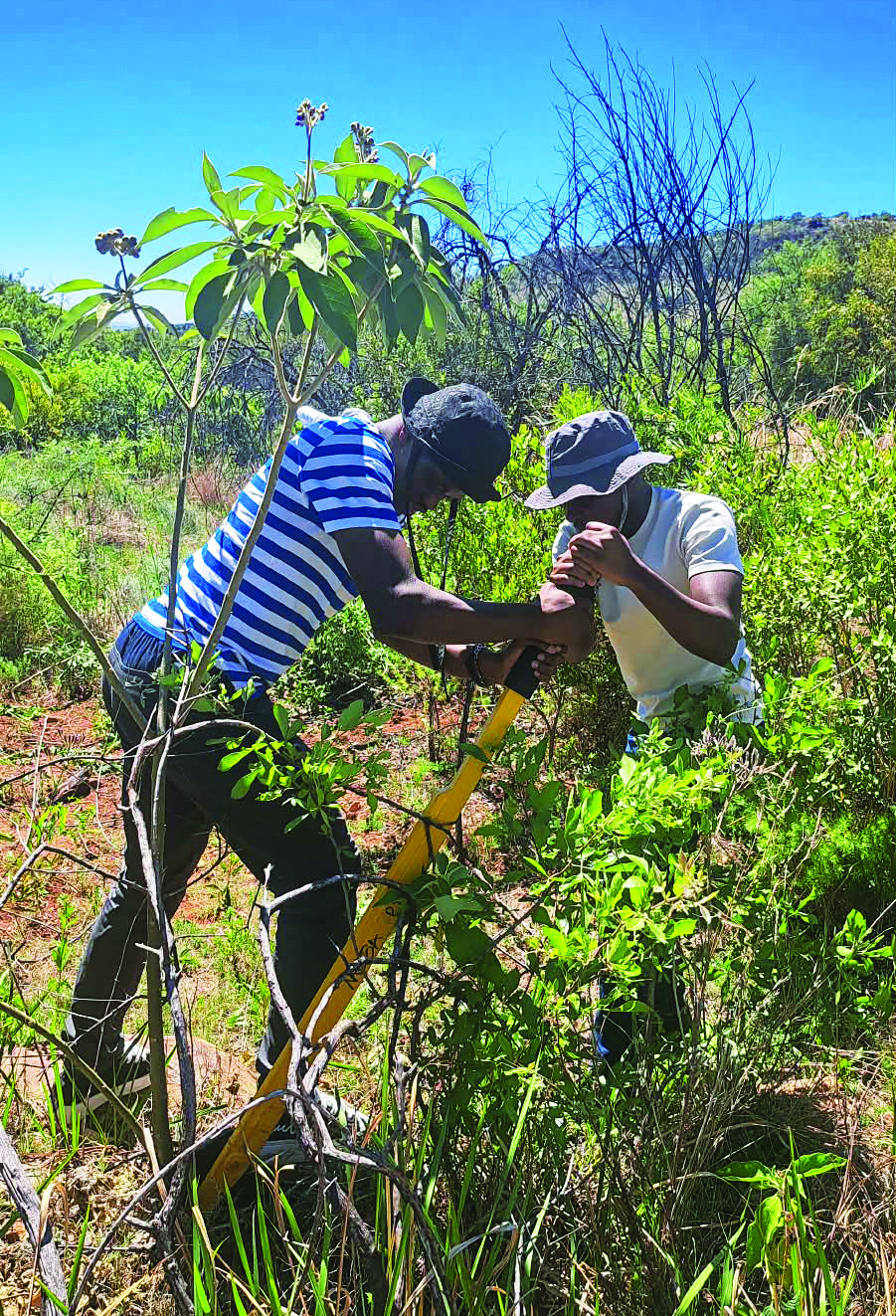
Yellow stakes help track bracken at Kgaswane
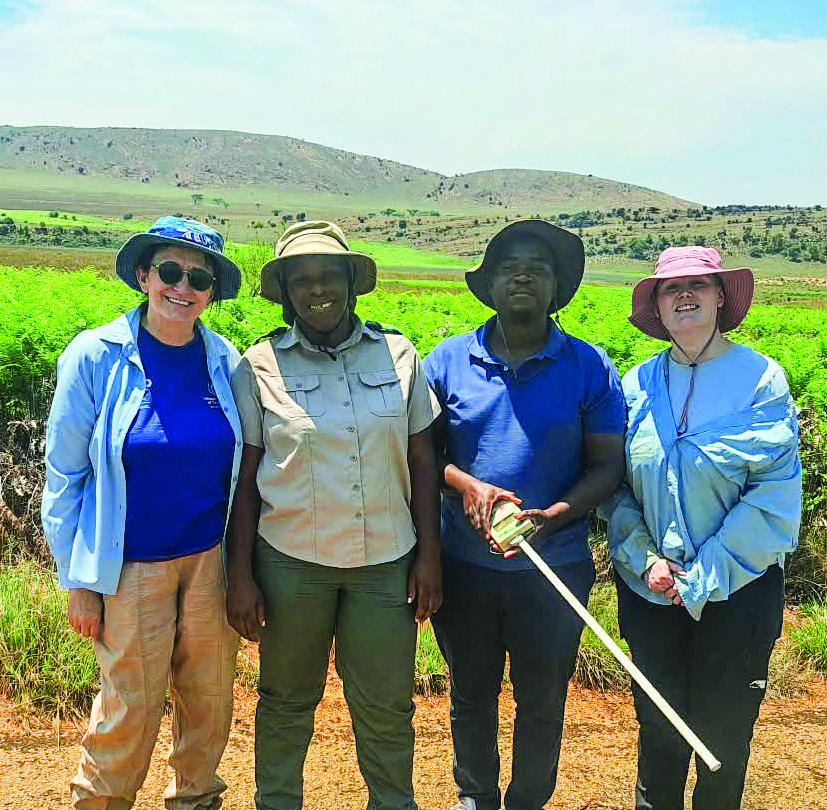
From left: Catherine Dzerefos (Tshwane University of Technology), Tshifhiwa Malise (NW Parks) and master’s students Ignatius Guvi (Tshwane University of Technology) and Erin Kenyon (University of Pretoria).
Platinum Weekly newspaper | Rustenburg – Visitors to Kgaswane Mountain Reserve may notice something unusual on the Sable loop: bright yellow stakes in the grassland and bracken fern (Pteridium aquilinum). These do not indicate a new trail or development but form part of a master’s research project investigating how bracken fern may be affecting biodiversity and the availability of forage for wildlife. The research will be undertaken by master’s student Ignatius Guvi under the supervision of Prof Dave Thompson of the South African Environmental Observation Network (SAEON) and Dr Catherine Dzerefos of Tshwane University of Technology (TUT). Bracken fern can form extensive, dense stands and has the potential to alter the vegetation growing beneath and around it. In a protected area such as Kgaswane Mountain Reserve, understanding these changes is important because grassland and other herbaceous plants provide both habitat for biodiversity and forage for grazing wildlife. Guvi’s research will monitor bracken plants and the surrounding vegetation over time. The yellow stakes are an important part of this monitoring system, allowing the researchers to return to the same marked plants and locations and record changes consistently. Visitors are therefore kindly asked not to remove, move or disturb the yellow stakes. An important component of the fieldwork is understanding how bracken affects the light reaching plants beneath its canopy. The research team gratefully acknowledges Erin Kenyon from the University of Pretoria, who provided training on recording measurements of photosynthetically active radiation (PAR). PAR represents the portion of sunlight that plants can use for photosynthesis. These measurements will help determine how much light reaches vegetation growing beneath and around bracken and provide insight into one of the mechanisms through which dense bracken stands may influence other plant species. The research is expected to provide practical information to assist conservation managers in understanding the ecological consequences of bracken expansion and determining whether active management or restoration may be necessary in affected areas. So, if you are visiting Kgaswane Mountain Reserve and encounter a series of yellow stakes among the vegetation, please leave them exactly where they are. They are helping scientists follow ecological change one plant at a time.